
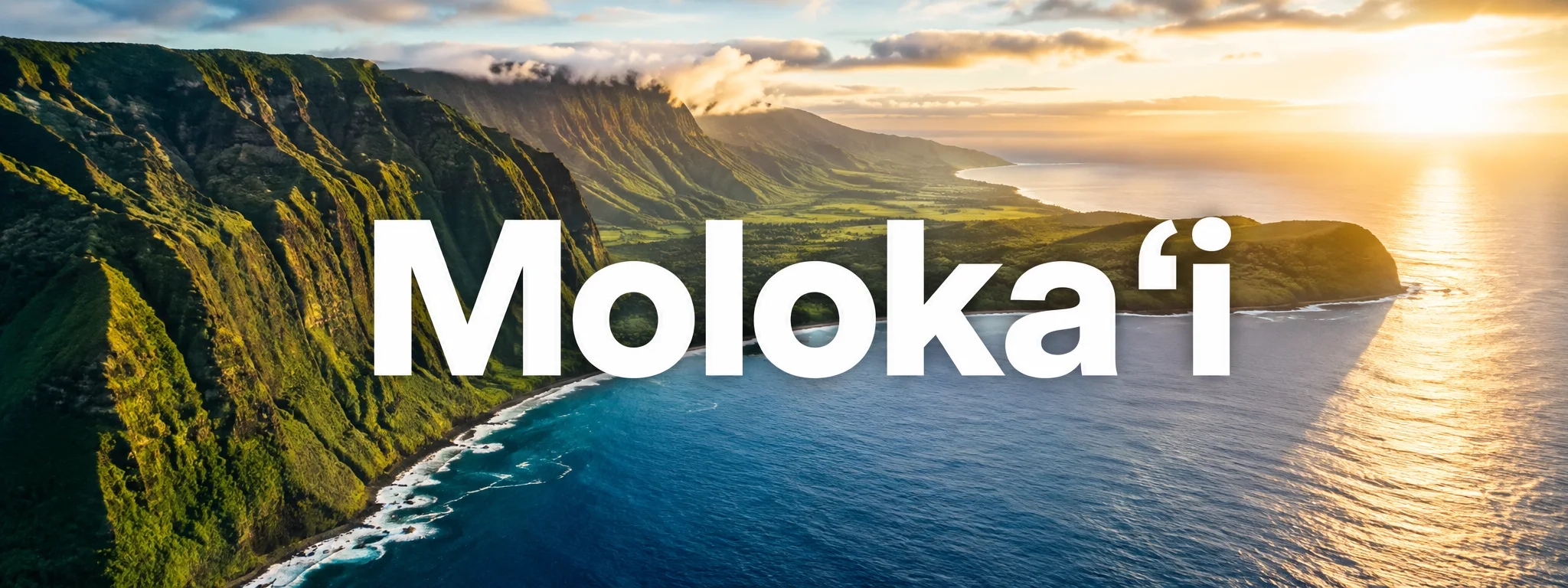

What Molokaʻi actually is
The least-visited main island, by deliberate local choice as much as by geography. There are no traffic lights on Molokaʻi, no building taller than a coconut tree, and no large-scale resort development — residents have repeatedly organized against big tourism projects over the decades, and the island looks the way it does today because of that. If you want a genuine sense of what Hawaiʻi looked like before mass tourism, this is the closest a visitor can get.
Kalaupapa National Historical Park
The single most significant site on the island, and one of the most sobering in the entire state: a remote peninsula, cut off from the rest of Molokaʻi by some of the tallest sea cliffs on Earth, that operated as a forced isolation settlement for people with Hansen's disease (leprosy) from 1866 until the policy ended in 1969. Father Damien and Mother Marianne Cope, both later canonized, spent their lives caring for patients here. Access is tightly controlled out of respect for the community that still lives there — the peninsula is reachable by a steep switchback mule trail, on foot with a permit, or by small plane, always through an authorized tour. Check current access rules before planning a visit; this is not a casual sightseeing stop.
The sea cliffs
The north shore's sea cliffs, above Kalaupapa, are among the tallest in the world — some sections exceed 3,000 feet. There's no road access to view them from land; the classic views come from the air (small plane or helicopter tour departing another island) or from the water on the rare calm-weather boat trips that run along this coast.
Halawa Valley
A lush, remote valley at the island's east end, home to some of the earliest Polynesian settlements in Hawaiʻi and, today, guided cultural hikes led by local families to waterfalls within the valley — access is by guided tour only, out of respect for private land and living cultural sites.
Practicalities
Molokaʻi has one small commercial hub (Kaunakakai) with limited restaurants, a handful of small hotels and vacation rentals, and no major chain hotels. Bring cash-flexibility and patience — hours are informal and things close early. Fly in via Hoolehua Airport (MKK), a short hop from Honolulu.