

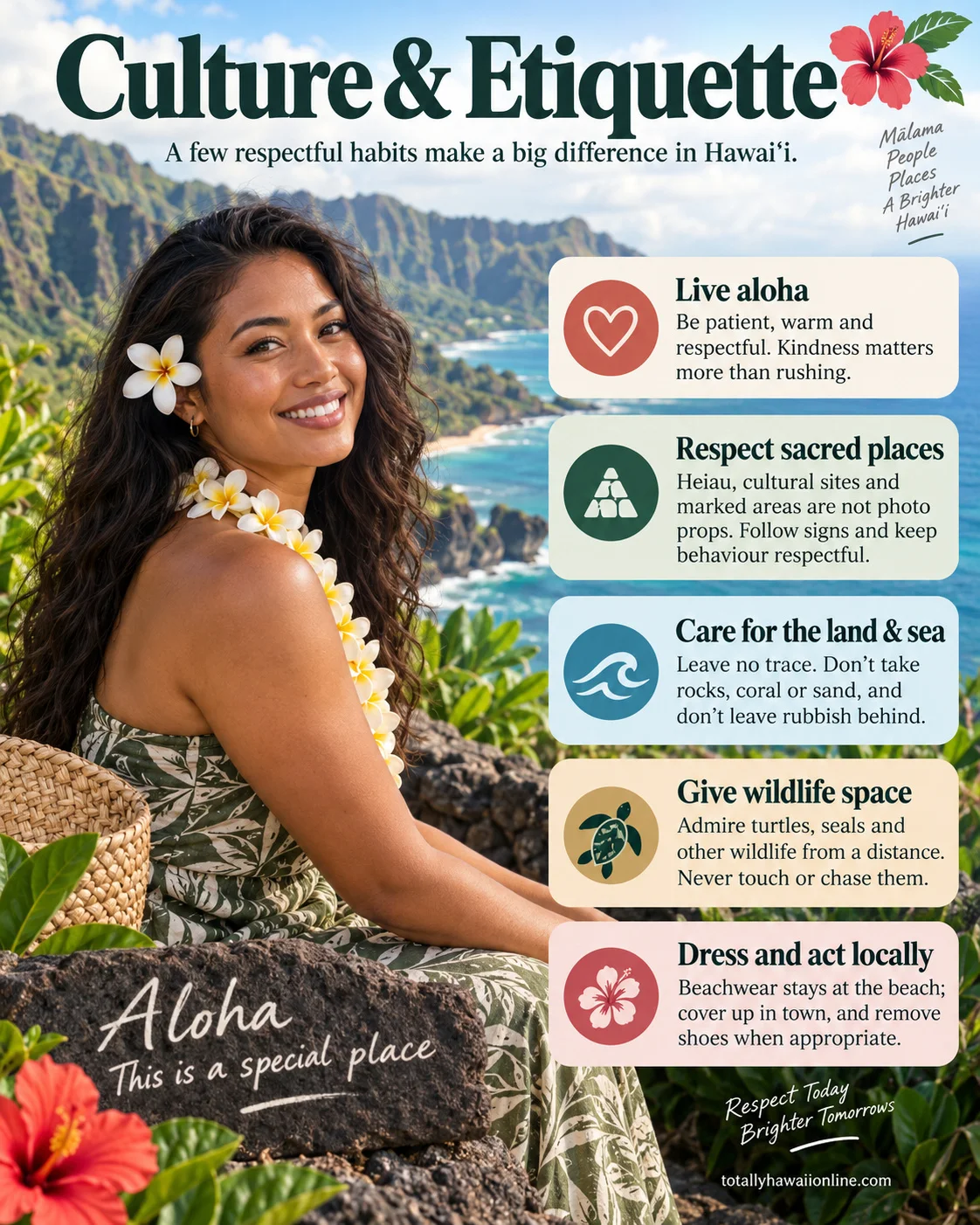
Aloha ʻāina — care for the land
The single idea that underlies most Hawaiian etiquette is aloha ʻāina: a reciprocal relationship with the land, treating it as something that gives and deserves care in return, not just scenery to consume. In practice, this shows up in very concrete visitor behaviors.
Concrete habits that make a real difference
- Stay on marked trails and never move rocks or build stacked rock towers ("stacking") — it disrupts erosion patterns, wildlife habitat, and in many spots has cultural significance locals ask visitors not to disturb.
- Don't take lava rock or sand as souvenirs — beyond the (real, if debated) "Pele's curse" legend, removing material contributes to real environmental degradation at popular sites.
- Use reef-safe, mineral sunscreen — see our snorkeling guide for specifics.
- Keep a respectful distance from wildlife — honu (green sea turtles) and monk seals are both protected species; approaching too closely is not just poor etiquette but can be a legal violation.
- Ask before photographing people, especially at cultural events like hula performances or ceremonies that aren't explicitly staged for visitors.
Sacred sites (wahi pana)
Heiau (temple platforms), burial sites, and summits like Mauna Kea carry deep spiritual significance. Not every sacred site is obviously marked as one — if a site has signage asking for quiet, no climbing, or no food, that request deserves to be honored without needing further explanation.
Words worth using correctly
Hawaiian is a living, official state language, not a decorative one. Making a genuine effort with pronunciation — including the ʻokina and kahakō — is noticed and appreciated. See our language basics for the core marks and a few everyday words.
On "aloha spirit" as more than a greeting
Aloha is often translated simply as "hello," but it's better understood as an entire ethic — patience, generosity, and treating strangers with warmth by default. Hawaiʻi state law (the Aloha Spirit Law) even formally recognizes it as a guiding value for public conduct. Visitors who slow down, say thank you (mahalo) genuinely, and treat service workers and locals with real patience tend to have noticeably better trips — not by coincidence.