
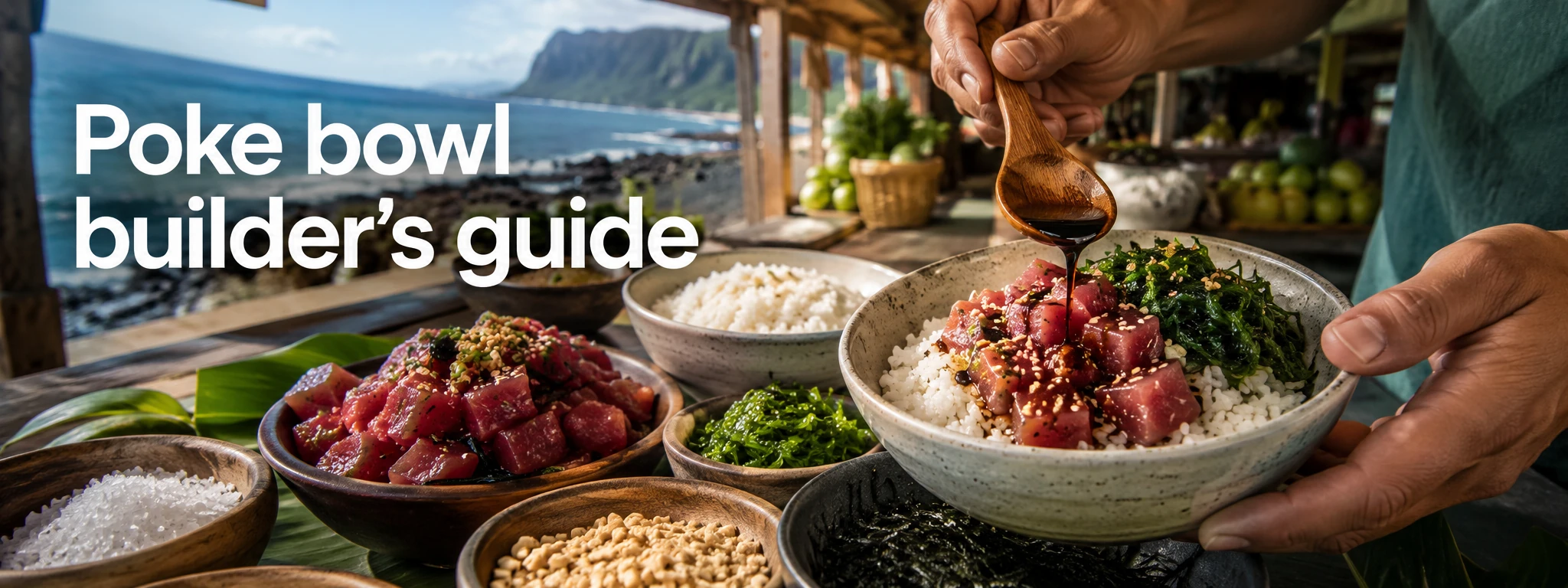
First distinction: poke does not need a “bowl”
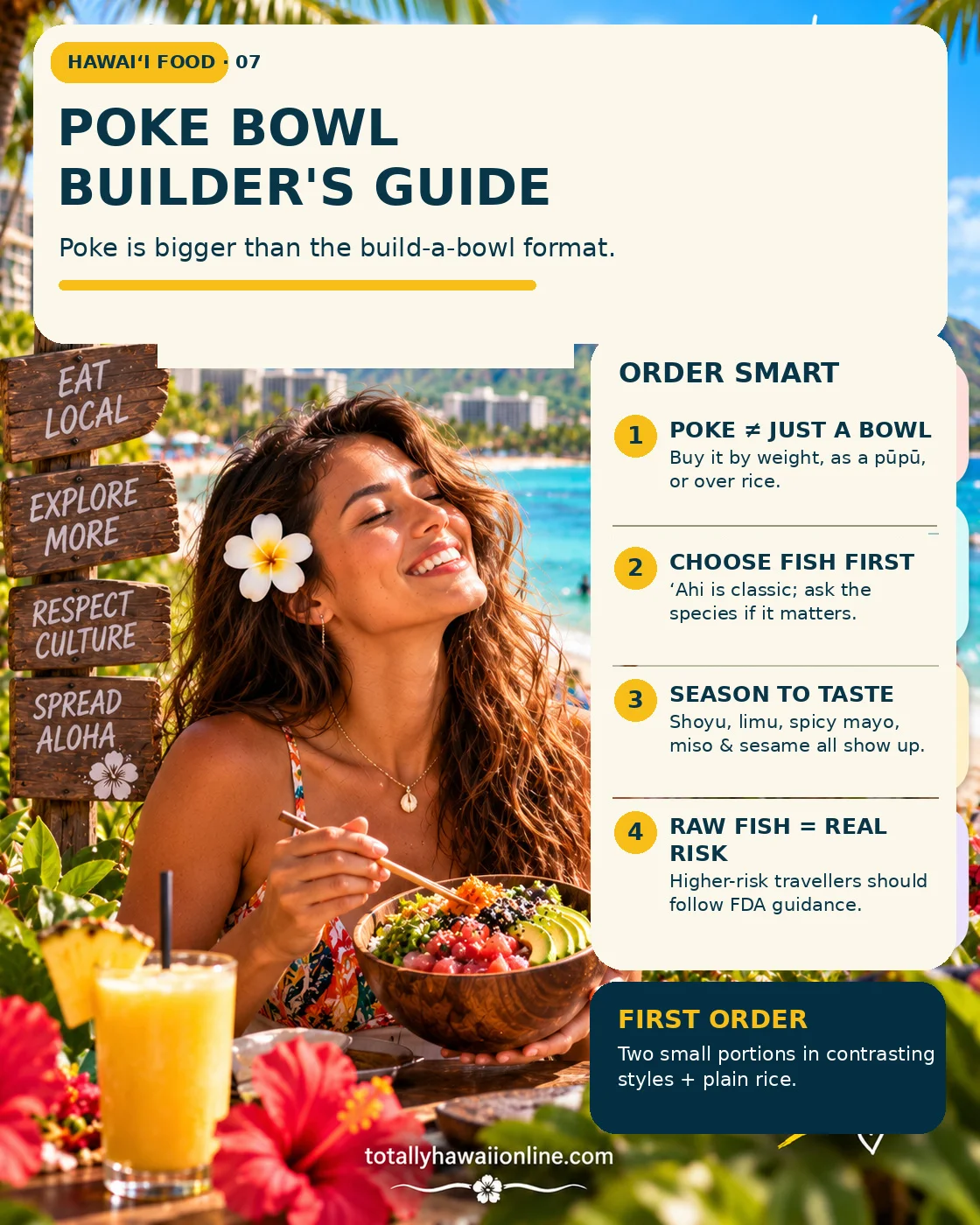
Poke is bigger than the mainland build-a-bowl format. In Hawaiʻi you can buy seasoned cut fish by weight from a supermarket or fish counter, eat it as a pūpū, or put it over rice yourself. Modern bowl shops are a real part of today's food scene, but rice, ten toppings and a drizzle matrix are not requirements for something to count as poke.
The older Hawaiian idea is simpler — and the modern story is layered
Native Hawaiian preparations of cut fish used ingredients such as sea salt, limu (seaweed) and ʻinamona (roasted kukui nut). Hawaiʻi's later Japanese and other local culinary influences helped shape the shoyu, sesame and chilli-forward styles visitors commonly meet today. I would avoid turning this into a purity contest: “traditional” and “modern local” can both be useful descriptions if you say what you actually mean.
Choose the fish before the toppings
- ʻAhi: a classic poke choice. The word may refer to yellowfin or bigeye tuna, so ask if the species matters to you.
- Tako: octopus, with a firmer chew and often a shoyu-based preparation.
- Salmon and other modern options: common at many counters, even though they do not tell the same local-history story as ʻahi, limu and ʻinamona.
- Cooked or tofu options: useful if someone in your group does not eat raw fish; they are not a reason to pretend raw-fish safety concerns disappear from a shared counter.
Then pick a seasoning style
Shoyu-based poke, limu-forward versions, spicy mayo, wasabi, miso and sesame-heavy styles can all appear side by side. Taste one or two before loading up a huge container if samples are offered. Salt, soy, sesame and chilli can build quickly; the most complicated-looking bowl is not automatically the best.
Allergies: the obvious fish is not the only issue
Shoyu commonly contains wheat and soy. Sesame is frequent. ʻInamona is made from kukui (candlenut). Mayo-based sauces may contain egg. Cross-contact is possible at a busy counter using shared scoops and prep space. If an allergy is serious, ask the establishment directly instead of reverse-engineering the ingredient list from the colour of the marinade.
Raw fish means a real food-safety decision
The FDA warns that raw fish is more likely than cooked fish to contain parasites or bacteria. People who are pregnant, immunocompromised, elderly or otherwise at higher risk from foodborne illness should use the relevant medical/FDA guidance rather than treating “fresh island fish” as a safety guarantee. For pregnancy specifically, FDA advice also distinguishes fish by mercury level and lists bigeye tuna among the highest-mercury choices to avoid.
Ciguatera is a separate reef-fish issue
Hawaiʻi's Department of Health says ciguatera occurs across the islands and comes from toxins that can build up in tropical reef fish; cooking or freezing does not destroy those toxins. That is not a reason to panic over every ʻahi poke bowl — it is a reason not to assume every locally caught reef fish is automatically safer because it is fresh. Buy from reputable food businesses and ask what the fish is.
Supermarket counter or dedicated poke shop?
Both can be good. Local supermarkets are a normal way people in Hawaiʻi buy poke, not a second-rate fallback for travellers. Dedicated poke shops can offer more customisation. I choose based on visible turnover, clean cold holding, clear labelling and whether the seasoning tastes good — not on whether the shop has a surfboard on the wall.
A simple first order
For two people, I would start with two small portions in contrasting styles — perhaps a shoyu ʻahi and a limu or spicy option — plus plain rice. Eat that before deciding you need six toppings. It is cheaper, easier to compare and much closer to learning what the counter actually does well.
Cheers, Carpe Diem & let the fish lead the bowl, not the topping avalanche! 🍻⏳🐟
TATS Man
Your shoyu-to-safety bowl navigator