

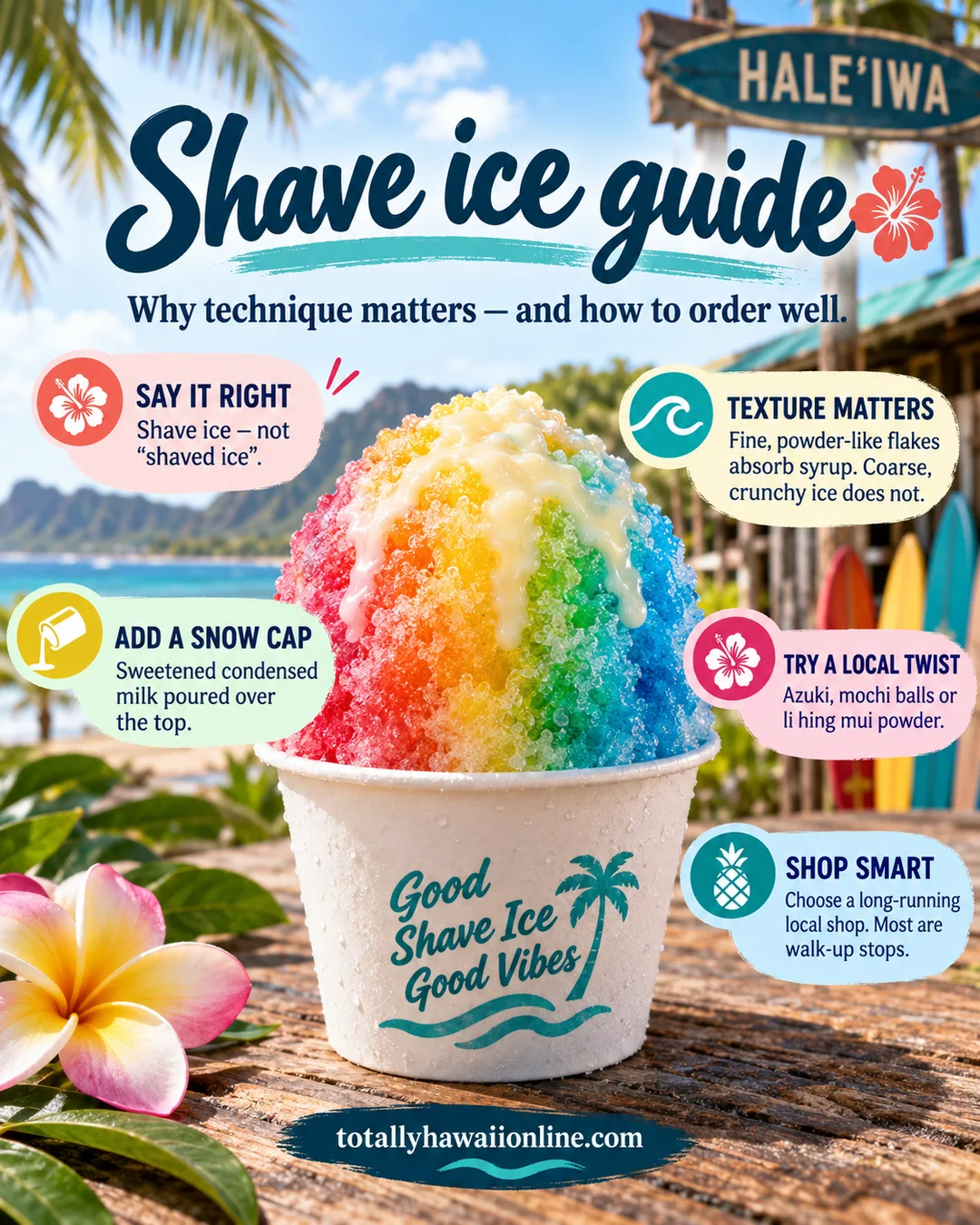
First: in Hawaiʻi it is shave ice
The local term is shave ice, not “shaved ice”. GoHawaii traces the Hawaiʻi version to the plantation era, when immigrant communities shaved blocks of ice and added fruit juice and other flavours. Modern versions can include syrups, ice cream, azuki beans, condensed milk, mochi and plenty of newer ideas. I would treat that history as a multicultural local-food story, not turn a dessert order into an authenticity exam.
The texture is the point
The big difference from a coarse snow cone is the ice. Fine shaving creates a soft texture that holds syrup through the cup instead of leaving a puddle of flavour at the top and plain ice underneath. That is why a simple flavour combination from a shop that shaves the ice well can beat a menu with 40 toppings and a neon sign.
You do not need specialist knowledge to judge it. Take the first few spoonfuls before everything melts together: the ice should feel fine and light rather than like crushed cubes.
Build the order in layers
- Choose two or three flavours, not seven. Passionfruit/lilikoʻi, guava, pineapple, coconut and other tropical combinations are common, but the exact syrups vary by shop.
- Snow cap: sweetened condensed milk over the top. Rich, very sweet and worth sharing if you are unsure.
- Azuki beans: sweet red beans, a Japanese-influenced addition that gives a softer, less purely sugary contrast.
- Mochi: chewy rice-cake pieces that add texture; ask what kind the shop uses if allergens matter.
- Ice cream underneath: turns a refreshing stop into a much heavier dessert. On a hot day, I would decide this before automatically saying yes to every add-on.
- Li hing mui: a sweet-salty-sour preserved-plum flavour or powder that shows up across local snack culture. Try a little first if the flavour is new to you.
Do not turn Matsumoto — or any famous shop — into a compulsory pilgrimage
Haleʻiwa is strongly associated with both North Shore food trucks and shave ice, and GoHawaii specifically points visitors toward the treat there. A famous shop can be fun because it is part of the place's visitor story. It is not evidence that a less-famous shop on Maui, Kauaʻi or Hawaiʻi Island is automatically second-rate.
My decision rule is boring but useful: if the famous place fits the route and the queue is reasonable, go. If it requires a long detour or a huge wait, have shave ice where you actually are. The islands have enough good dessert stops without converting one cup into a logistical project.
Timing changes the experience
Shave ice melts fast in tropical heat. It is a poor car snack and an even worse “we'll buy it now and eat it at the beach in 25 minutes” plan. Eat it where you buy it, use the provided holder if there is one, and keep napkins close. Midday is an obvious time for a cooling stop, but it can also be the busiest.
If a shop is outdoors, rain and wind can matter just as much as heat. An afternoon shower does not ruin the day; it might simply make another stop a better first move.
Allergies and dietary needs: ask about the extras, not only the ice
Plain ice and fruit-flavoured syrup may look simple, but toppings introduce milk, beans, mochi ingredients, nuts, colourings and shared utensils. Severe allergies need a direct ingredient and cross-contact conversation. Condensed milk and ice cream obviously add dairy; some syrups or toppings can contain ingredients you would not guess from the flavour name.
For vegan or gluten-free travellers, do not rely on “it's just ice”. Ask about the syrup and every add-on you are considering.
Natural syrup versus bright syrup is a preference, not a moral ranking
Some shops lean into fresh fruit and house-made syrups; others serve the intensely coloured flavours many people associate with childhood shave ice. Both can be part of the modern Hawaiʻi experience. I would choose on taste, ingredients and what you actually want that day rather than pretending one style is the only legitimate version.
Cheers, Carpe Diem & keep it finely shaved! 🍻⏳🍧
TATS Man
Your syrup-to-ice ratio supervisor